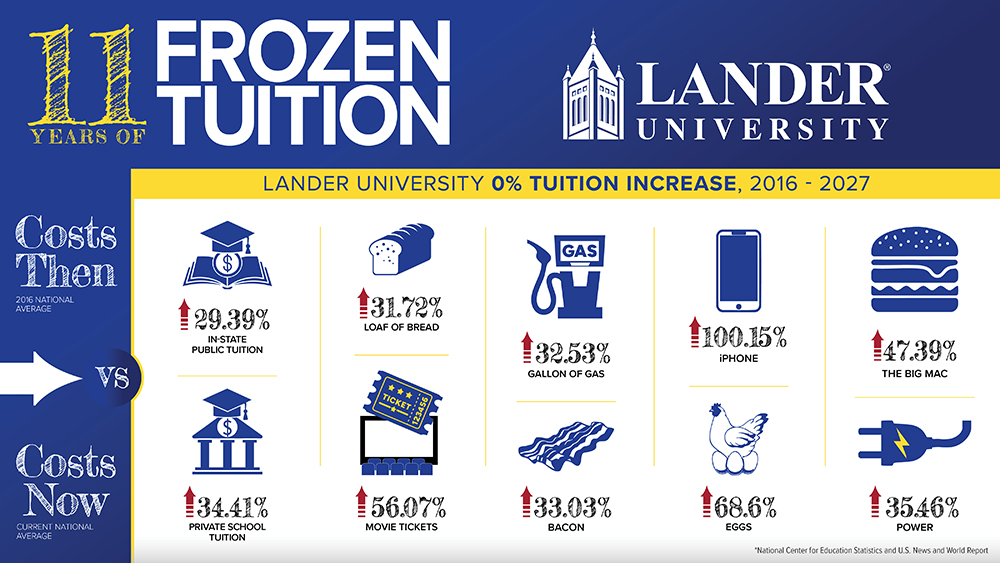
Nationally Recognized for Value, Lander Extends Tuition Freeze to 11 Years
Students who choose to attend Lander University for the 2026-27 academic year will pay the same tuition rate that former students paid more than a decade ago.
The University’s Board of Trustees voted Wednesday (Dec. 17) to freeze annual tuition at $10,700 for undergraduate, in-state students for an unprecedented 11th consecutive year.
The decision reinforces the University’s long-standing commitment to affordability, access and value in higher education, said Lander President Richard Cosentino.
“Freezing tuition for 11 years reflects our determination to put Lander students first,” Cosentino said. “By holding the line on costs, we are easing the financial burden on students and their families, and allowing them to focus on earning a high-quality education that prepares them for meaningful careers and lives of purpose.”
Freezing tuition has been a boost to the University’s efforts to attract and retain students. In Fall 2025, Lander enrolled its largest student body to date with over 4,600 students.
University officials point to the sustained commitment to affordability as a key factor in attracting and retaining students, particularly at a time when rising costs are a concern nationwide. “By keeping tuition stable, while continuing to invest in academic quality and student support, Lander has strengthened its appeal to students who are seeking value and opportunity in their education,” said Don Lloyd, board chairman.
Lander has received national attention for its commitment to affordability. Last year, Forbes magazine recognized Lander for its decision not to raise tuition, highlighting the University as a standout among higher education institutions that have taken meaningful steps to keep college accessible for students and families.
“This decision removes barriers, expands opportunity and sends a clear message that Lander is committed to helping students achieve their goals without incurring unnecessary financial strain,” Lloyd said.
By investing in students and their futures, Lander is also investing in the long-term economic success of South Carolina. “More than 90 percent of our students are from South Carolina,” Cosentino said. “By completing their degrees with less financial burden, they are better positioned to enter the workforce, contribute to local communities and meet the state’s growing demand for skilled, educated professionals. This will strengthen our state’s economy for generations to come.”