
Lander ROTC, Public Health Alumna Is Committed to Helping Others
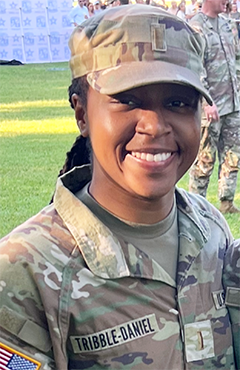 Trinity Tribble-Daniel joined Lander University’s ROTC program and discovered camaraderie, leadership opportunities and a sense of purpose. She also found her future – a career in the U.S. Army where she is currently training at Fort Sill in Oklahoma.
“ROTC helped me to become less reserved,” she said. “I was shy and quiet. But ROTC opened my eyes and helped me to become more confident and develop a sense of direction.”
With a desire to combine her military experience with a commitment to serve others, Tribble-Daniel, of Laurens, pursued studies in public health. “I realized that service in the military requires a soldier to think outside the box at times, and that sort of creative thinking aligns with my interest in public health.”
After earning her bachelor’s degree in public health in May, Tribble-Daniel was first assigned to Fort Knox. As she advances in her military training, she also has her sights set on a position with a medical and health focus.
“I’m keeping all options open at this point, but I have a passion for helping other people,” she said.
Public Health a Viable Career Path for Soldiers and Civilians
A degree in public health provides a student with a well-rounded education that incorporates an understanding of health and wellness through the basics of biology, microbiology, anatomy and physiology, psychology and other areas of science and medicine, said Dr. Claire Marie Mensack, director of Lander’s Public Health Program.
“The military has soldiers and civilians who work as public health specialists in a wide range of areas, including health promotion and education, counseling and rehabilitation, environmental health and epidemiology,” she said.
Within the military are health education professionals from public health who deliver programs to the various commands and infrastructures of the military. “These programs address health promotion, of course, as well as disease protection and prevention. They also have trained psychiatrists, psychologists and other mental health professionals who function in so many aspects of health.”
In addition to these professional areas are veterinarians who care for military dogs, occupational and physical therapists, social workers, nurses, physicians and other health care professionals devoted to those in the military and those who are transitioning to civilian life, Mensack said.
“To me the question is not so much what can you do in the military with a public health background, but what are you unable to do?” she said.
Making a Meaningful Difference
Tribble-Daniel said Lander’s public health program has played a central role in this new chapter in her life. In addition to the courses she took on health, wellness and disease prevention, Lander’s emphasis on leadership reinforced the same values she learned through ROTC.
“I enjoy doing for others. It’s what brings a smile to my face,” she said. “I have always been one to put others before myself. It is part of my desire to serve.”
Through her education at Lander and the new skills that she is learning in the military, Tribble-Daniel has the knowledge and mindset to make a meaningful difference wherever her Army career takes her.